Small sideboard layouts for flats and compact homes
A small sideboard does a practical job in a flat: it gives clutter a home without taking over the room. In compact homes, the best layout is rarely about fitting more furniture in. It is about choosing a piece that works at the scale of the room, keeps daily routes clear and makes storage easy to reach.
The focus here is the small oak sideboard, especially the compact 80cm wide solid oak or painted styles often considered for living rooms, hallways and Dining areas. Solid oak brings a warm, steady look that sits comfortably with both pale walls and darker floors. Painted finishes can make a piece recede, which helps in rooms where space feels tight. The layout matters just as much as the finish, because a sideboard that is technically small can still feel bulky if it sits in the wrong place.
What a compact sideboard is for
A compact sideboard is usually a low, wide cabinet with doors, drawers or a mix of both. Its job is to hold the things that would otherwise gather on tables, shelves or the floor. In a flat, that might mean dinnerware, tablets, cables, post, gloves, keys, pet lead, or the small bits that come with daily life. A small oak sideboard offers enclosed storage, so the room looks calmer than it would with open shelving packed full.
The useful part is the way a sideboard works at room level. A sofa needs space around it. A dining table needs chairs to pull out. A hallway needs a path from the door. A sideboard can sit against a wall and provide storage without requiring people to walk around it, provided the depth and door swing suit the room. That is why a compact 80cm wide piece is often easier to place than a broad sideboard that dominates the wall.
Width is only one measurement. Depth affects how far the cabinet projects into the room, and height affects how heavy it looks. A low sideboard under a mirror or artwork can make a wall feel more composed. A taller cabinet may offer more storage but can feel more imposing in a narrow flat. The aim is to match the piece to the wall and the route through the room, not just to the empty corner that happens to be available.
Where a small oak sideboard works best
In a living room, the most natural place is along the longest clear wall, close to the activities it supports. If the sideboard holds media accessories, it can sit opposite or beside the seating. If it holds dining items, it may be better near the table. Keeping the storage near the place where things are used makes it more likely that the cabinet will be used well.
In a dining area, a sideboard can act as a soft boundary between the eating space and the rest of the flat. A compact cabinet leaves more room for chairs and makes the area feel less crowded. This is where an 80cm wide design can be useful: it gives a clear surface for serving dishes or placing a lamp while still leaving wall space around it. The top should not become a permanent dumping ground, though. A couple of chosen objects look intentional; a pile of unopened post makes the room feel smaller.
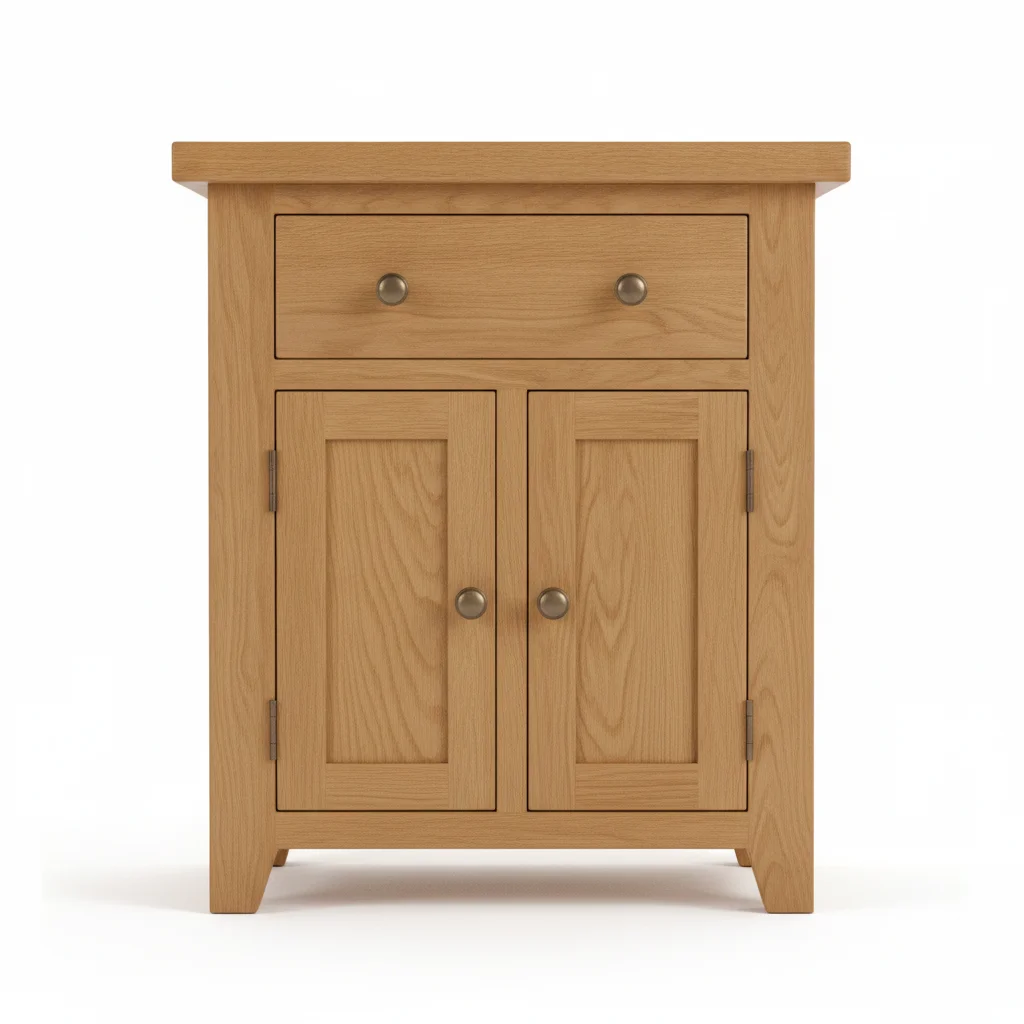
In a hallway, a sideboard needs careful placement. It should not narrow the walking route or block a door. A low cabinet can hold shoes, scarves and keys, while the top provides a landing spot for everyday items. If the hallway is narrow, shallow depth matters more than extra width. Doors that open outwards also need space, so sliding doors or drawers may be easier to live with where people pass close by.
Bedrooms can benefit from the same idea. A small oak sideboard can hold bedding, clothing extras or travel cases, especially where wardrobes are limited. In a studio flat, it may separate sleeping and living zones without acting like a hard wall. A painted sideboard can feel lighter in a small bedroom, while oak can add warmth to a room with plain walls and simple textiles.
Measuring before choosing a layout
Good layout starts with a few simple measurements. Measure the wall where the sideboard will sit, then measure the floor route around it. Leave enough space for doors, drawers and people. A cabinet may fit against a wall on paper, yet still be awkward if a door opens into the same area or if a radiator sits just below the wall.
Think vertically as well. The space above the sideboard can make the arrangement feel settled. A mirror can reflect light and make a small room feel less closed in. A piece of art can draw the eye upward. A lamp can create a pool of light that makes the corner feel useful rather than leftover. Keep these additions in proportion to the cabinet. A very large mirror above a small sideboard can overwhelm it, while a tiny frame may look lost.
It also helps to check what needs to go inside. Enclosed shelves suit stacks of plates, baskets and folded items. Drawers suit smaller objects that would vanish on a shelf. A mix of doors and drawers is often the most flexible choice in a flat, because daily items and occasional items can be kept apart. Before choosing, sort the likely contents into everyday, seasonal and rarely used. The sideboard should mainly hold the first group. Deep storage is less useful if everything has to be unpacked to reach a key or a charger.
Working with a compact 80cm width
An 80cm wide sideboard has a clear role in compact interiors. It is large enough to provide useful storage, yet small enough to sit under a window, beside a dining table or along a short hallway wall. The narrow footprint reduces visual weight. It also leaves room for other furniture, which matters in flats where one oversized item can dictate the whole layout.
The trade-off is capacity. A compact cabinet will not hold everything a larger sideboard can. That limitation can be helpful, because it encourages a more deliberate approach to storage. Items that are used often stay close at hand. Things that are rarely needed may need another home, such as a high shelf, a wardrobe or a storage box under a bed. A small oak sideboard works best as part of a wider storage plan, not as the only answer to every possession.
Oak Castle Furniture sits in this compact furniture space, with solid oak and painted sideboards and cabinets aimed at smaller rooms. A piece from that kind of range is most useful when the dimensions are matched to the room first and the finish is chosen second. Oak can give a small flat a sense of warmth and permanence. Painted finishes can suit lighter schemes or help the cabinet blend into the wall. Both approaches can work; the right choice depends on what the room already has.
Layout ideas that make a small room feel calmer
One reliable approach is to treat the sideboard as part of a wall rather than as a standalone object. Align it with a mirror, artwork or shelf above, and keep the surrounding wall relatively quiet. This makes the arrangement look planned. If the room has several small items on display, grouping them above the sideboard can stop them from spreading across every surface.
Another approach is to pair the cabinet with furniture of similar visual weight. A lightweight glass table and a bulky dark sideboard can feel mismatched. A slim oak dining table and a compact oak sideboard can feel more connected, even if they are not identical. Repeating a material or colour in small doses helps a compact room feel coherent. Oak legs, a wooden frame, a warm basket or a similar tone in the flooring can create that link.
Keep the top surface simple. A lamp, a bowl for keys and one decorative object are usually enough. If the sideboard is in a dining space, a serving tray or a small vase may be practical. If it is in a hallway, a shallow tray can stop keys and coins from spreading. Clear surfaces make the cabinet look smaller and less demanding. When the top is crowded, the eye reads the whole area as busy.
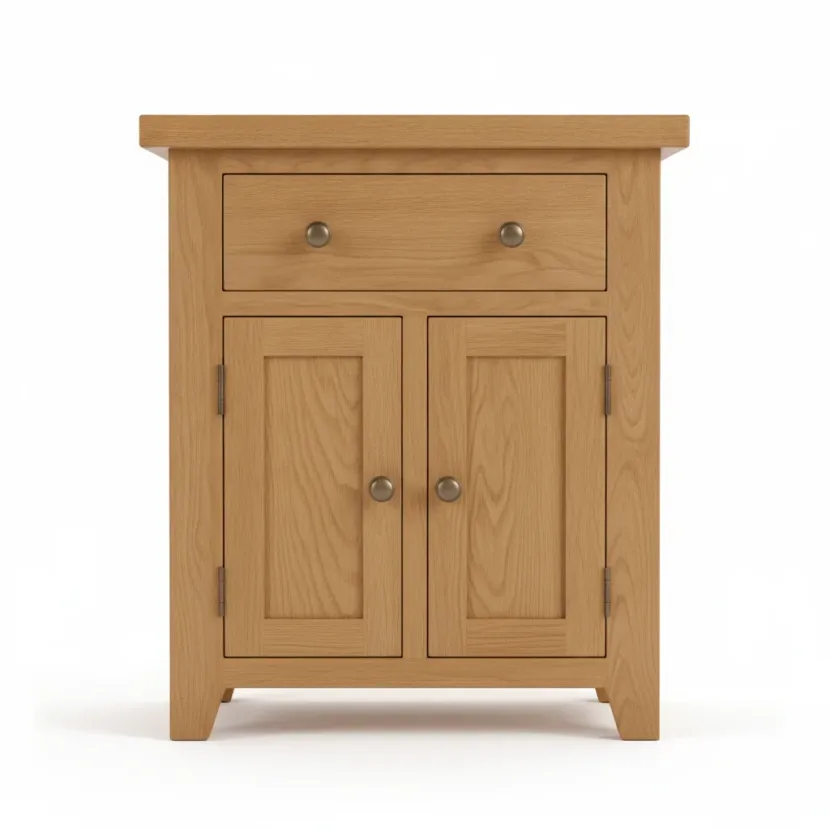
Lighting deserves attention too. A sideboard in a dark corner can feel like a heavy block. A nearby lamp or good general lighting makes the wood or painted finish easier to appreciate. In a flat with limited natural light, pale walls and a lighter sideboard finish can help the room feel open. In a brighter room, darker oak can add contrast and anchor the furniture.
What to watch out for
Avoid placing a sideboard where it interrupts movement. Hallways, the space between a sofa and coffee table, and the pull-out zone around a dining chair all need to stay clear. If the cabinet doors open towards that route, daily use will feel frustrating. Check the way each door moves before deciding on the position.
Also watch the height of nearby sockets, radiators and window sills. A sideboard under a window should not cover ventilation or make the sill awkward to use. A cabinet in front of a socket may be inconvenient if that socket is used often. These details are easy to miss when a room is empty, but they shape how the layout feels once the flat is in use.
Finally, think about the storage habit you want the cabinet to support. A small oak sideboard with closed doors gives a neat look, but it only works if items have a sensible place inside. Baskets or dividers can help separate categories. Keep frequently used things near the top or front. Store heavier items low down where possible, and avoid stacking so tightly that doors or drawers catch.
For flats and compact homes, a sideboard is less about filling a wall and more about choosing a piece that earns its space. A compact 80cm wide solid oak or painted cabinet can provide storage, soften a room and keep everyday clutter under control. The layout works when the cabinet sits clear of traffic, suits the scale of the wall and supports the way the room is actually used. Oak Castle Furniture is one name in this compact sideboard setting, but the broader lesson is simple: measure carefully, choose a finish that fits the room and let the sideboard do a defined job.